
Start Building Skill: Beginner Series Part 3
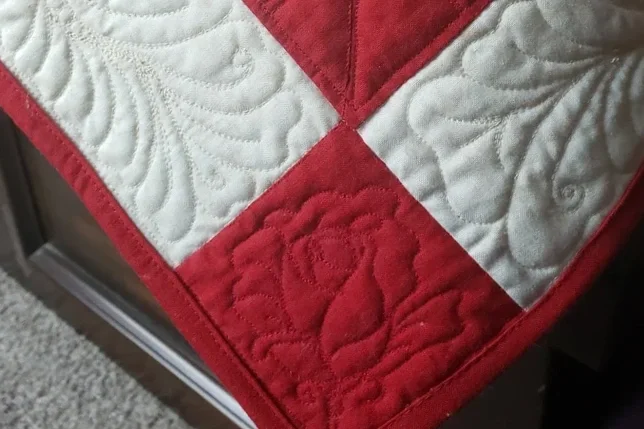
One of my first fancy borders done on a domestic machine. I am still so proud of that rose and couldn’t tell you how I even did that today.
Life happens to us all, myself included. I meant to get this post out there faster than this, but between the kids sporting events, my 9-5, several doctors appointments, and a funeral, it has taken longer than expected.
But it does allow a great opportunity to discuss our time management and setting realistic expectations when we work full time, have a family, and have other obligations. You don’t have to have it all or do it all, but you do need to make time for the things and the people you enjoy. Let’s dive in.
Making Time to Quilt When Life Is Full
Quilting often competes with work, family, and daily responsibilities. When time is limited, frustration usually isn’t caused by lack of motivation—it’s caused by unrealistic expectations.
The goal isn’t to quilt more.
It’s to quilt consistently and intentionally within the life you actually have.
Set Expectations That Fit Your Season
Progress looks different when you’re balancing a full-time job and a household.
Instead of expecting:
Entire tops finished in a weekend
Long, uninterrupted sewing sessions
Expect:
One step at a time
Projects that move forward slowly but steadily
A quilt made over months is still a successful quilt.
Use Small Time Blocks on Purpose
Waiting for “enough” time often means nothing gets done.
Use short sessions for:
Cutting a single unit
Chain piecing
Pressing blocks
Auditioning layout options
Action step:
Break your project into tasks that take 10–20 minutes. Choose one task per session.
Ten minutes of sewing is always better than no minutes.
Reduce Setup Friction
The harder it is to start, the less likely you’ll sew.
Make it easier by:
Leaving your machine set up
Keeping one active project visible
Stopping mid-task so you know exactly where to begin next time
Action step:
At the end of each session, write down your next step. That note becomes your starting point.
Protect Creative Time Without Guilt
Quilting isn’t just a hobby—it’s a form of restoration.
When creative time disappears entirely, burnout follows. Even brief, protected time helps maintain balance.
Action step:
Schedule quilting like an appointment—even if it’s once a week for 15 minutes.
Combat Isolation with Connection
Sewing is often solitary, especially for those working from home or caring for kids at home.
If feasible:
Attend open sew sessions
Go on retreats
Sew with friends occasionally
Connection doesn’t need to be frequent to be effective.
Quilt at the Pace Your Life Allows
You don’t need to sew daily.
You don’t need fast finishes.
You don’t need to keep up with anyone else.
Slow progress is still progress.
Consistency matters more than speed.
And your creative time is worth protecting.