
My first Quilt Pattern!
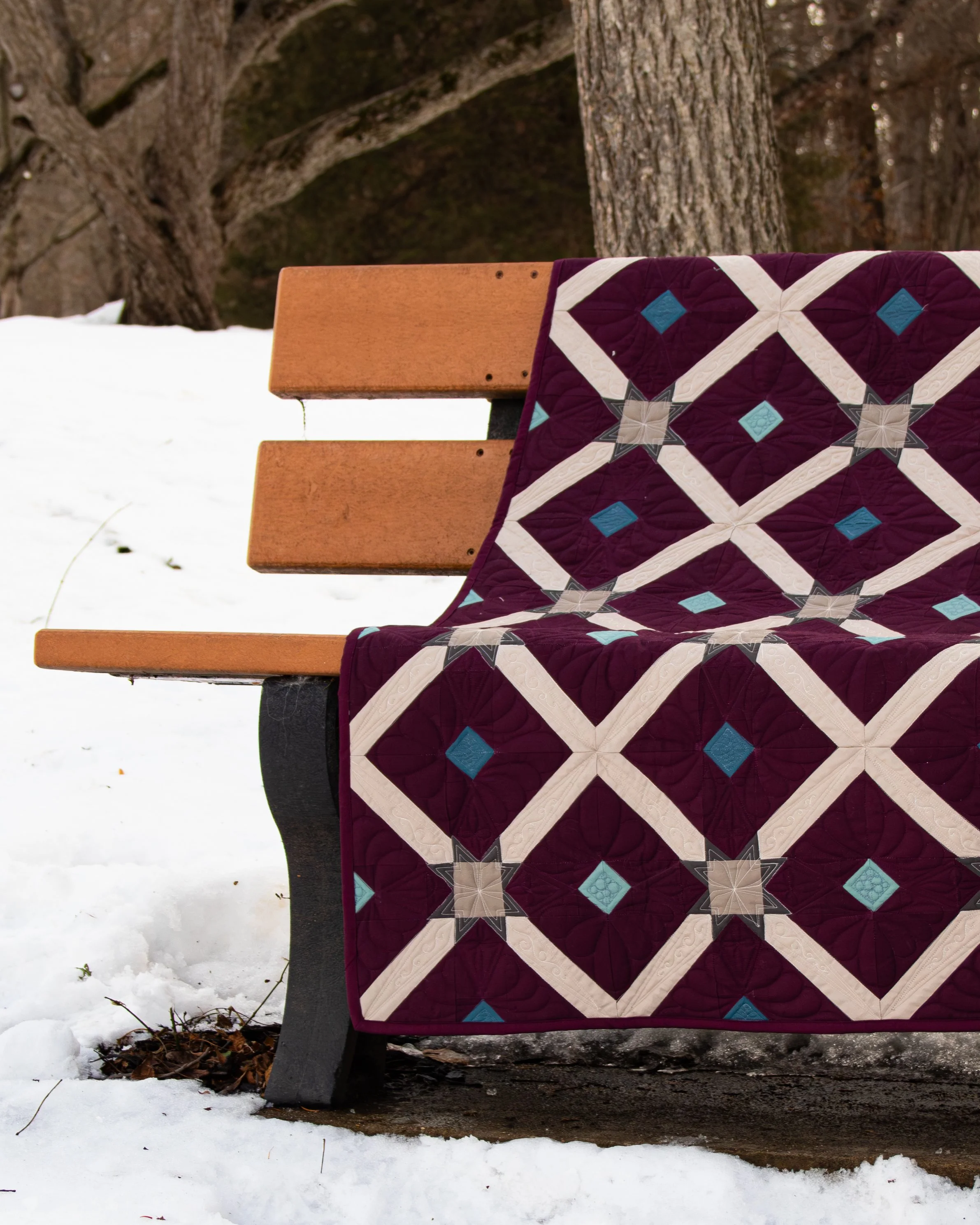
The Conservatory pattern was written with a dark and moody palette in mind from the very beginning. Color, contrast, and depth were ingrained into the design’s structure from the start, rather than asking you to reinterpret someone else’s color logic after the fact. It showcases darker choices in a serious and considerate way and is meant for those who want darkness in their designs, without apology or compromise.
It was written for quilters who want to slow down, make deliberate choices, and use quilting as a way to build longarm confidence, regardless of their starting point. This pattern assumes that thoughtfulness matters and that skill is built through intention, not speed.
In The Conservatory, free-motion quilting with intention means making decisions about stitch density, motif placement, and scale before the machine is turned on. The pattern supports this process by offering hand-drawn, guided templates alongside video tutorials that show exactly how each design is stitched out. Instead of a vague “quilt as desired,” the guides provide clear, purposeful options for a range of skill levels.
Too many options overwhelm quickly, and learning is not linear. By narrowing the focus to a small number of thoughtfully chosen designs, the pattern allows you to hone in on mastering one skill at a time, visually, practically, and without overwhelm. The diagrams in The Conservatory include both a beginner-friendly edge-to-edge option and a more custom layout designed to stretch your skill set and allow the quilt top to truly stand out. Building skills this way makes each quilt easier than the one before it.
Quilting with intention transforms the finished piece into more than a completed project. It becomes a family heirloom, a work of art, and something beautifully crafted from start to finish. The Conservatory draws inspiration from Victorian glass window panes and architecture, with simpler, cleaner lines and subtle stars. Like all good Victorian architecture, it has strong bones and immaculate details, elaborate where they need to be and restrained where they do not.
This pattern is an invitation to move beyond finishing for the sake of completion. It asks you to sit with the process, trust your choices, and create work that reflects both skill and atmosphere, because quilting deserves to be taken seriously, and so do you.
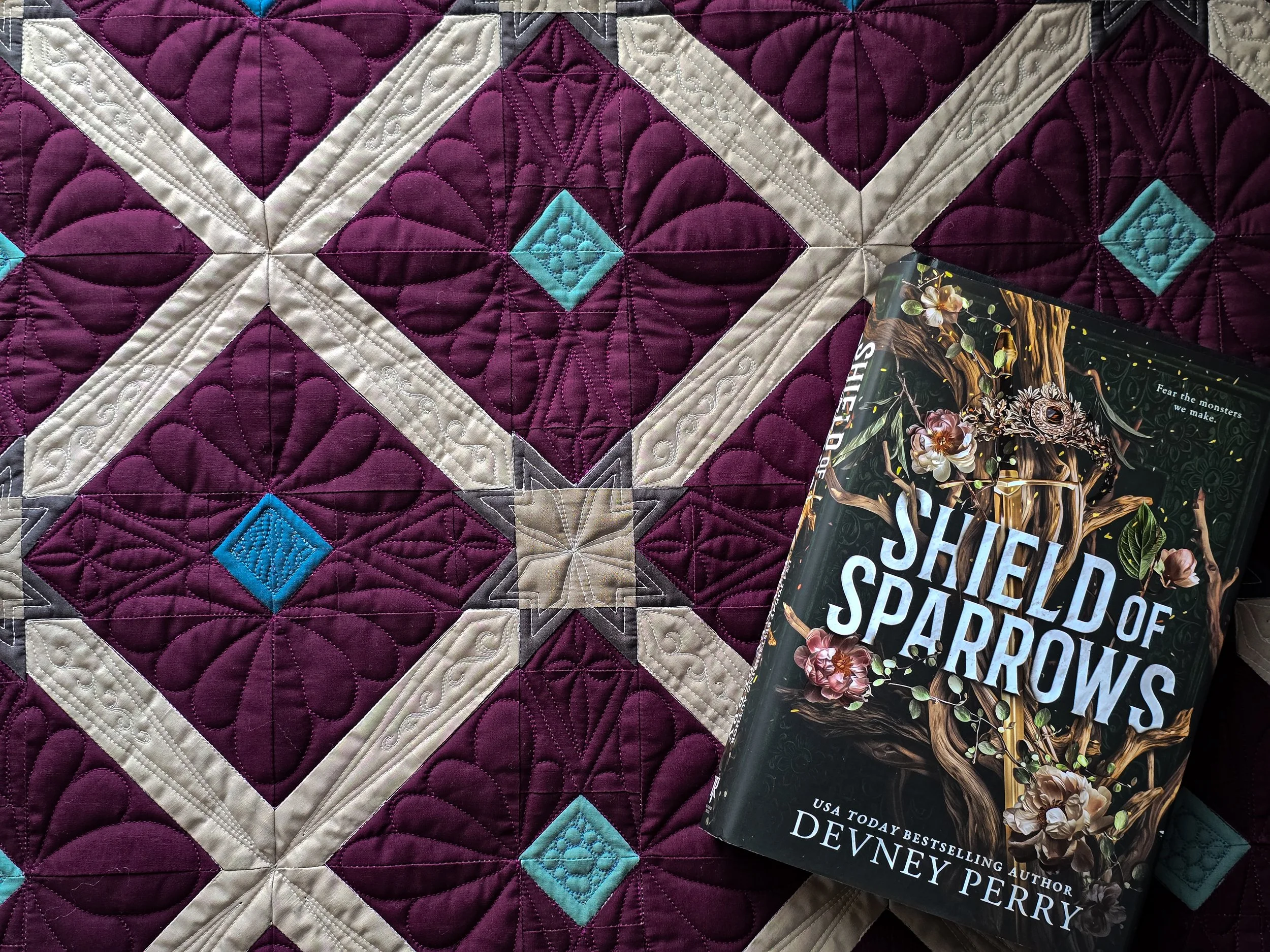
Nothing beats wrapping up in a quilt reading a favorite book. If you haven’t read Shield of Sparrows by Devney Perry, you really should. The next book in the series is due to release in April of 2026 and I cannot wait to make a quilt for it!